Learn the 6 urgent warning signs to watch for during pregnancy, when to call your doctor, and when to get...
Read MoreSame Day Appointments Available

Same Day Appointments Available
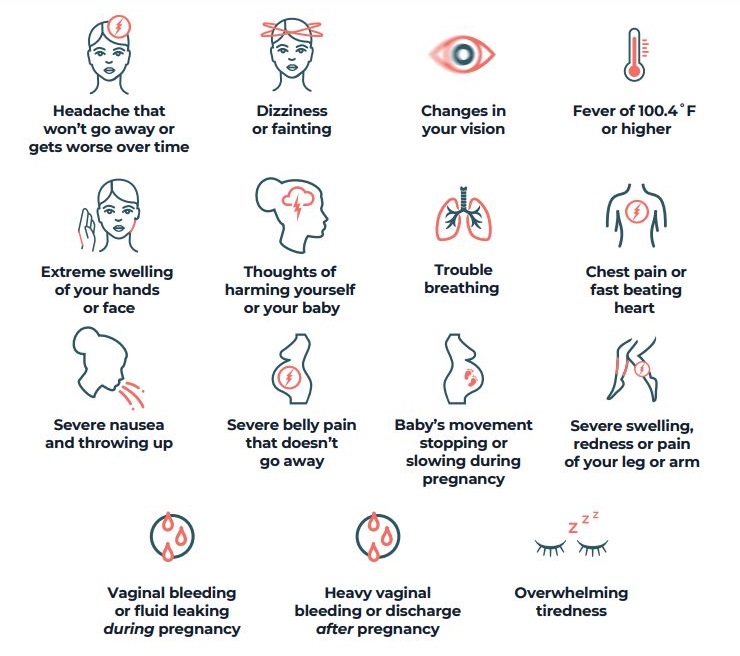
You are pregnant and your body is changing. It can be hard to tell the difference between a normal pregnancy change and a concerning symptom. Even if you are early in your pregnancy – maybe you just took a pregnancy test – it is important to be aware of these 6 urgent warning signs during pregnancy, all of which require medical care.
Remember, this list is NOT all inclusive… this means you may experience other symptoms that could be concerning, so be sure to check with your doctor if you are experiencing ANY symptoms that have you concerned!
Headaches: Early pregnancy hormone shifts can cause headaches, but those types of headaches usually subside around the end of the first trimester. If you don’t have a history of headaches and you suddenly start experiencing them or if you experience a headache that doesn’t go away with treatment or hydration, it is a good idea to let your provider know.
It is especially important to immediately notify your doctor or go to the Emergency Department (ED) if you are experiencing what you would consider the worst headache of your life or if your headache also comes with blurred vision, changes in vision, or swelling in your hands and face.
Dizziness: It isn’t uncommon for a pregnant woman to experience a bit of lightheadedness when she stands or starts moving very quickly. But, if you have dizziness that is persistent at or beyond 16 weeks OR if it causes you to pass out, you should notify your doctor right away.
Vaginal bleeding or spotting during pregnancy can cause a lot of worry, but it does not always result in problems. It is important, though, not to ignore any bleeding or spotting.
If you experience light spotting that goes away in a day, it is ok to wait until your next OB appointment to tell your provider. But, if you experience persistent spotting that lasts for two or more days, bright red period like bleeding, or if you pass any clots or tissue at any point during your pregnancy you should immediately contact your OB or go to the ED.
Most women experience an increase in vaginal discharge during pregnancy, and this is ok. If this discharge is accompanied by itching, swelling, a rash, an odor or other signs of infection, you should notify your provider right away.
Or, if you notice you are constantly leaking fluid or your underwear is constantly moist, it is best to check with your doctor to make sure you are not leaking amniotic fluid.
Pregnancy results in shifts in hormone levels which can result in a whirlwind of emotional changes. Women who already have a history of depression or anxiety may find these emotional changes are more significant.
If you experience any of the following during your pregnancy you should speak with your OB or current mental health provider:
Your belly is growing, things are shifting and changing, but sometimes a pregnant woman will experience symptoms that have no explanation. Always reach out to your OB for any concerns or questions you may have!
If you experience ANY of the following signs and symptoms, you should notify your OB right away or seek care in the ED:
You may catch a cold or other virus during pregnancy. Most of the time, these minor illnesses can be handled with rest and hydration. If your symptoms are severe, be sure to check with your doctor to learn which over the counter medications can be taken to treat symptoms during pregnancy.
Sometimes though, there are bigger infections that can be more serious and require medical attention. Such infections include sexually transmitted infections (STIs), urinary tract infections (UTIs), respiratory infections, and bacterial vaginosis (BV), to name a few.
If you experience any of the following, you should reach out to your OB right away:
As your baby grows, you will start to feel him or her move in the form of flutters, rolls, and kicks. Most women start to feel little flutters or swishes around 20 weeks. Once you become aware of the baby’s movement, it is hard to ignore.
Once fetal movement becomes regular, most OB doctors will have you start performing kick counts.
This article explains kick counts well and might be helpful: Kick Counts (Fetal Movement Counting)
Remember, babies do have sleep wake cycles. ometimes they aren’t moving a ton simply because they are sleeping.
If you notice that your baby is not moving around as much, or you aren’t noticing any fetal movement, it is important to notify your OB.
🧠Main Idea: The 6 urgent warning signs listed above are just some of the many things that women can experience during pregnancy. Keep in mind it is never wrong to call your OB to voice your concerns or ask questions. You know your body best, so if something seems ‘off,’ be sure to call your doctor and discuss it.
If you’re facing an unplanned pregnancy and you’re still considering your options, Alcove Health Women’s Clinic is here to help you process your options, understand what’s going on inside your body, and get the information you need to make a safe and informed decision for your reproductive health.
We can also help with parenting support if you’ve made the decision to carry your pregnancy to term. Alcove Health offers a parenting education program and provides material support to help you prepare to bring your baby home from the hospital. Call or click the button below to schedule your free and confidential appointment today.
Learn the 6 urgent warning signs to watch for during pregnancy, when to call your doctor, and when to get...
Read MoreFeeling unsure about abortion? Wondering if you should cancel your appointment? It’s okay to have questions. Take time to explore...

Read MoreLearn the signs of anxiety and depression during pregnancy, ways to find support, and where to turn for help.

Read MoreWe’ve been listening to women for over four decades as they sort through their options, process their feelings, and figure...

Read More